I spent two unforgettable days in Seoul at the end of my epic cruise journey across Japan and South Korea. It was the perfect finale—packed with vibrant culture, delicious food, and iconic sights. From historic palaces to bustling markets, I enjoyed so many highlights, but I know I’ve only scratched the surface. There’s still so much more to explore, and I can’t wait to come back one day! Below are highlights where I visited in Seoul.

Seoul Station
I stayed at the Four Points Sheraton Seoul Station, which made getting around incredibly convenient thanks to its close proximity to the metro and various transportation options. Seoul Station itself is absolutely huge and can be a bit confusing for first-time visitors to navigate, but thankfully there are plenty of signs in English and friendly information staff ready to help. The station is a major transportation hub in the city, connecting several subway lines as well as KTX high-speed trains, making it easy to travel both within Seoul and to other parts of Korea. Its modern facilities and large shopping areas add to the experience, making it more than just a transit point. Nearby, I discovered a lovely pedestrian walkway filled with greenery and beautiful views of the city skyline, providing a peaceful escape amid the urban hustle. The hotel’s great location also meant I was just steps away from convenience stores, where I got to try instant ramen and soju—classic Korean snacks famously featured in Squid Game.
Myeongdong
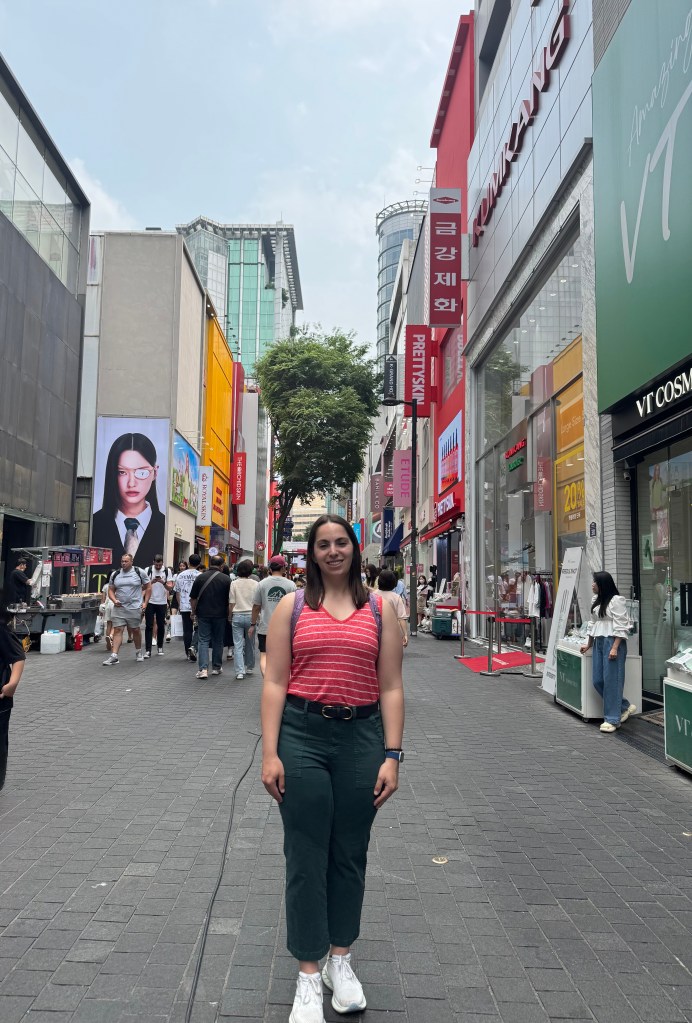
I visited the super cute shopping street of Myeongdong on my first afternoon in Seoul, and it was exactly everything I imagined when thinking about the city. After taking the metro from Seoul Station, I found myself surrounded by vibrant streets packed with the latest K-Fashion and K-Beauty shops, alongside countless K-Pop references that added to the energetic vibe. Since it was a Saturday, tons of street vendors lined the sidewalks, offering all kinds of delicious Korean street food. I spent hours wandering through various shops, picking up everything from quirky keychains to a custom bag I made by ironing on patches—a popular trend there. For lunch, I couldn’t resist trying Korean Fried Chicken, enjoying both the sweet/spicy sauce and the plain version; the batter was much crispier and lighter than what I’m used to back home, making it absolutely addictive. I ended the day at a well-known fried chicken chain that was packed with locals—a good sign, and definitely well deserved. Myeongdong’s streets were bursting with color and endless little alleys to explore, making it an incredibly fun and memorable way to spend my day in Seoul.

Gwangjang Market
I visited Gwangjang Market on my Seoul food tour, and it was such a cute and lively spot filled with vendors selling every kind of Korean street food you could imagine. We started with Mandu—Korean dumplings steamed in thin rice paper and filled with pork, kimchi, and shrimp—and they were absolutely delicious. Then we sat down at a famous place for Mung Bean Pancake (Bindaetteok), which was deep-fried to a perfect crunch and served with sweet onions in a tangy sauce. We tried a popular drink, fermented rice wine which was sweet, creamy, and had a seltzer finish which was interesting. I tried the other famous dish soju on my own which is like a sweeter vodka. We also tried a fish pancake and the famous beef tartare called Yukhoe, a Korean delicacy served with fresh pear slices. I especially loved Tteokbokki, which are chewy rice cakes in a spicy, slightly sweet chili sauce. We had Kimbap too, which is seaweed rolled with rice and vegetables, similar to sushi. Later, we walked to a stand making hotteok, a warm, griddled pancake dessert filled with nuts and sugary syrup—it was so delicious and comforting. We also sampled snacks like dried strawberries, seeds, tapioca, and jellies. It was such a fun experience to try so many new flavors I never would have discovered on my own!
Insadong
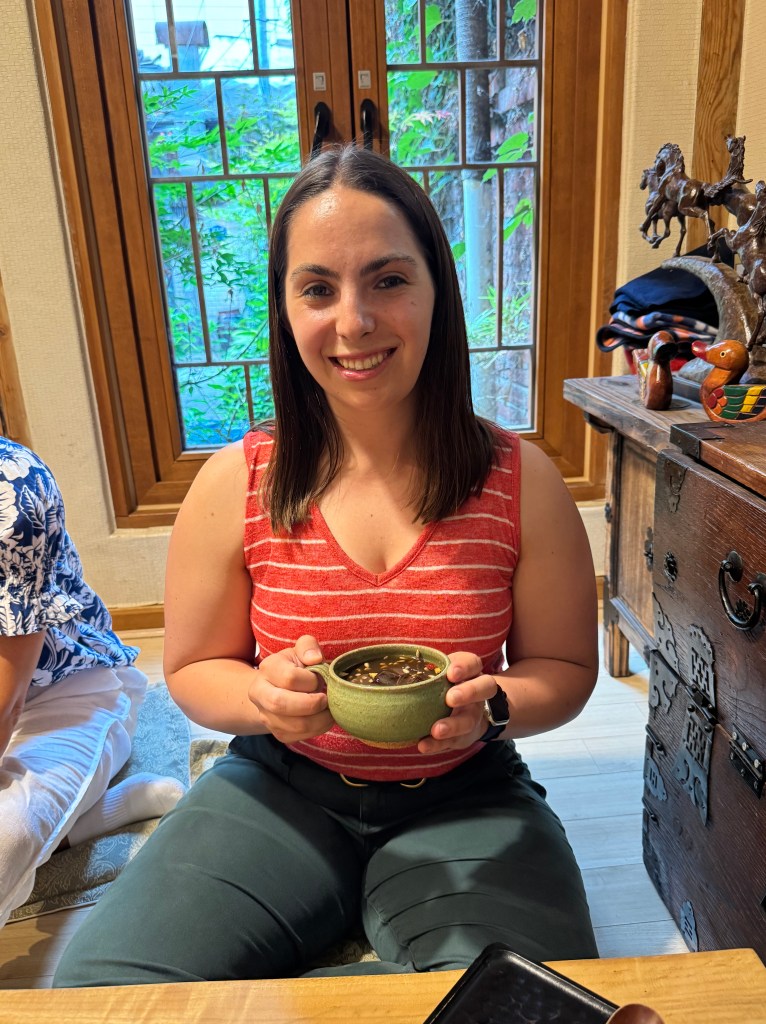
On our food tour, we walked to Insadong, which feels like old Seoul with its ornate buildings and much calmer streets compared to the busy Myeongdong I visited earlier that day. We stopped at an old, authentic tea house that had been converted into a cozy café, where we sat on mats at low tables and enjoyed fancy tea, shaved ice dessert, and traditional Korean sweets like sweet and salty bread. I tried the black herbal tea, known for its many health benefits, just like the other tea we sampled. It was such a great and peaceful experience that perfectly captured the charm of Insadong!
Namdaemun Market
At night, I visited the famous Namdaemun Market, one of Seoul’s oldest and largest traditional markets dating back to the 15th century. The market has everything you could ever need—from clothing and accessories to food products and a wide variety of Korean street food. Although I was too full from my earlier food tour to eat anything, it was really fun to explore all the vendors and soak in the lively atmosphere, getting a true feel for this bustling market’s energy.
Jogyesa Temple
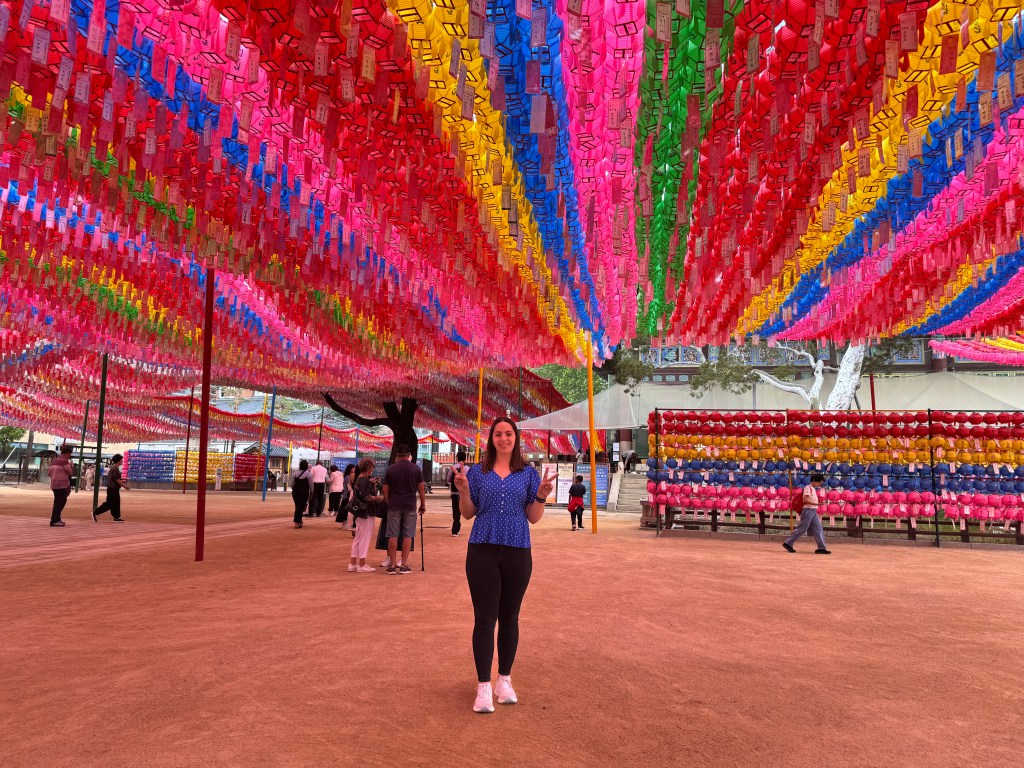
Jogyesa Temple was absolutely bursting with color. Lanterns in every shade swayed above our heads, and the gates and pavilions were covered in the most intricate, vibrant designs—it was like walking through a living artwork. I thought I might be a bit templed out after all the shrines in Japan, but this was something entirely different. The unique style and joyful color made it a real highlight of the trip. Stepping inside to see the golden Buddhas was such a peaceful, awe-inspiring moment. It truly showed how rich and beautiful Korean culture is.

Gyeongbokgung Palace
Gyeongbokgung Palace, built in 1395 during the Joseon Dynasty, is the largest of Seoul’s Five Grand Palaces and steeped in centuries of royal history. Walking through it felt a bit like being in Tiananmen Square—it just kept going, with grand gates and courtyards unfolding one after another. The place was full of visitors dressed in colorful hanbok (traditional Korean clothing), which looked amazing, but I was honestly relieved I didn’t rent one myself—it was hot! One of my favorite parts was watching the changing of the royal guards. It’s a reenactment of the original ceremony from ancient times, but it was still really fun and impressive to witness in person.
National Folk Museum of Korea
Visiting the National Folk Museum of Korea turned out to be a hidden gem of the trip. Tucked within the Gyeongbokgung Palace grounds, it offered a fascinating glimpse into traditional Korean life—from birth rituals to ancestral ceremonies. My guide shared so many interesting details that brought the exhibits to life, showing how deeply rooted customs still shape modern Korea. The museum itself was beautifully curated, with life-size displays and cultural artifacts that made it easy to imagine daily life in centuries past. Plus, it was a welcome escape from the summer heat—cool, quiet, and full of insight.
National Ginseng Center
We visited the National Ginseng Center, where we learned all about the cultivation of ginseng—a prized treasure in Korean culture known for its powerful health benefits. The staff explained the detailed growing process, from planting to harvesting, and shared the differences between various types of ginseng, including red and white varieties. It was fascinating to see how deeply valued ginseng is in Korea, not just as a product but as part of their wellness tradition. We also got to try a few samples, including tea and extracts—it was a unique and surprisingly energizing experience!

Seoul Tower
We took the cable car up and down Namsan Mountain to visit the iconic Seoul Tower (Namsan Seoul Tower), which was originally built as a communications and observation tower to keep an eye on North Korea. Today, it’s one of Seoul’s top tourist attractions, offering panoramic views of both the northern and southern parts of the city. Unfortunately, there had been recent fires in the mountains, so the air was a bit hazy—but it was still incredible to see just how vast and vibrant Seoul is from above. tower is surrounded by the beautiful Namsan Park, a massive green space perfect for walks and city escapes. At the top, there are cute shops, cafés, and restaurants—but what really stood out were the thousands of colorful love locks covering the fences. It’s a tradition to write a message on a lock, leave it behind, and hopefully return to find it again—just like in Paris. I left one myself, and it felt surprisingly emotional and special.

Namsangol Hanok Village
Namsangol Hanok Village is a beautifully preserved collection of traditional Korean houses, or hanok, that date back to the Joseon Dynasty. This charming village offers a fascinating glimpse into the daily lives of Seoul’s residents centuries ago. Walking through the narrow courtyards and wooden rooms, I could almost feel the rhythm of life back then—the simple yet elegant design, the ondol heated floors, and the carefully crafted furniture all telling stories of Korea’s rich cultural heritage. It was amazing to see how these homes have been preserved right in the heart of the bustling city, providing a peaceful window into the past.
Gangnam
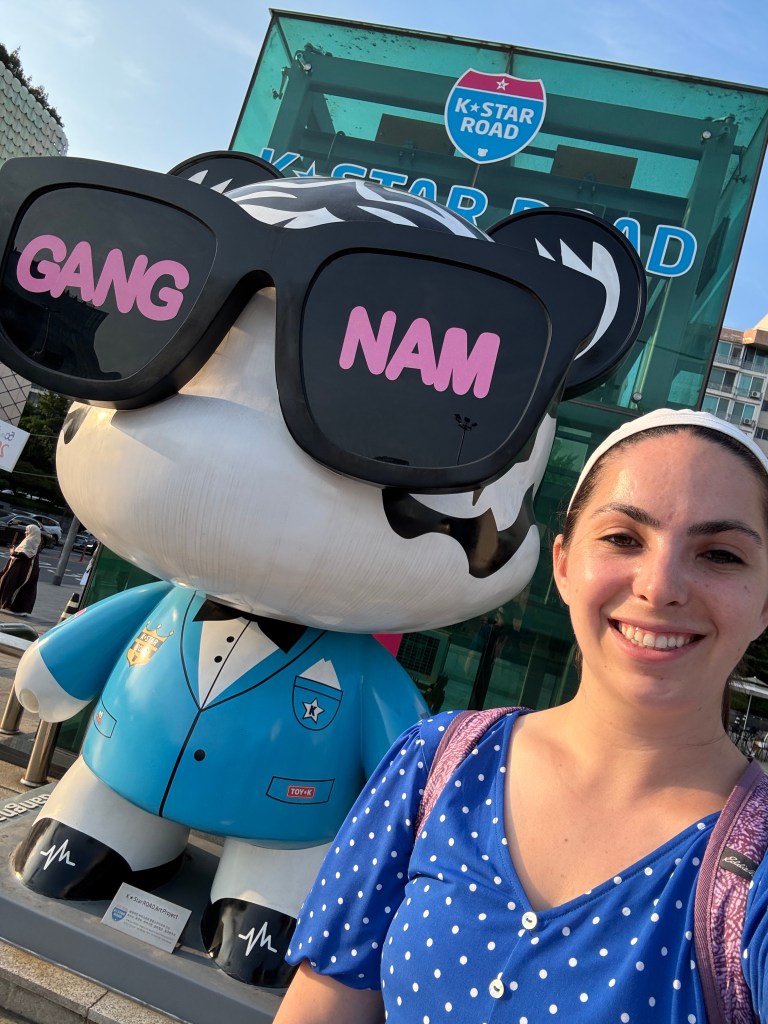
On my last night in Seoul, I decided to explore Gangnam—the flashy neighborhood that inspired the global hit “Gangnam Style” and is famous for its K-pop star sightings and upscale vibe. I started at the Coex Starlight Library, tucked surprisingly in the mall’s basement—such an unexpected but stunning spot, with towering bookshelves that make it a favorite for photos. Then I wandered along K-Star Road, where cute cat-like statues featuring designs inspired by different K-pop artists line the street, adding a playful touch to the luxury surroundings. Right nearby, high-end stores like Louis Vuitton showed off Gangnam’s ritzy side. I wrapped up my day with a delicious bibimbap, feeling like I truly lived the Seoul experience—and that this city had completely stolen my heart.


Leave a comment